Navigating academic style guides can feel like deciphering an ancient text, especially when terms like "Turabian" and "Chicago Style" get tossed around interchangeably. But what if we told you that the perceived battle of Turabian vs. Chicago Style: Key Differences is less of a showdown and more of a family reunion? The truth is, these two revered guides aren't competing styles; they're intrinsically linked, with one serving as a specialized application of the other.
Think of it this way: Chicago style is the comprehensive, sprawling encyclopedia of writing and publishing rules, while Turabian is your meticulously curated, student-focused textbook that extracts and tailors those very same rules for academic papers, theses, and dissertations. Understanding this relationship is the first step to confidently citing and formatting your work.
At a Glance: Your Quick Guide to Turabian & Chicago
- Fundamentally the Same: Turabian is essentially Chicago style, specifically adapted for student academic writing.
- Audience-Driven: Chicago (CMOS) caters to professional publishers and scholars; Turabian is designed for students.
- Scope Matters: CMOS is a massive, all-encompassing guide; Turabian is a concise, practical manual.
- Minor Formatting Nuances: Turabian offers specific student title page options and flexibility in footnote spacing, which CMOS typically doesn't detail for student work.
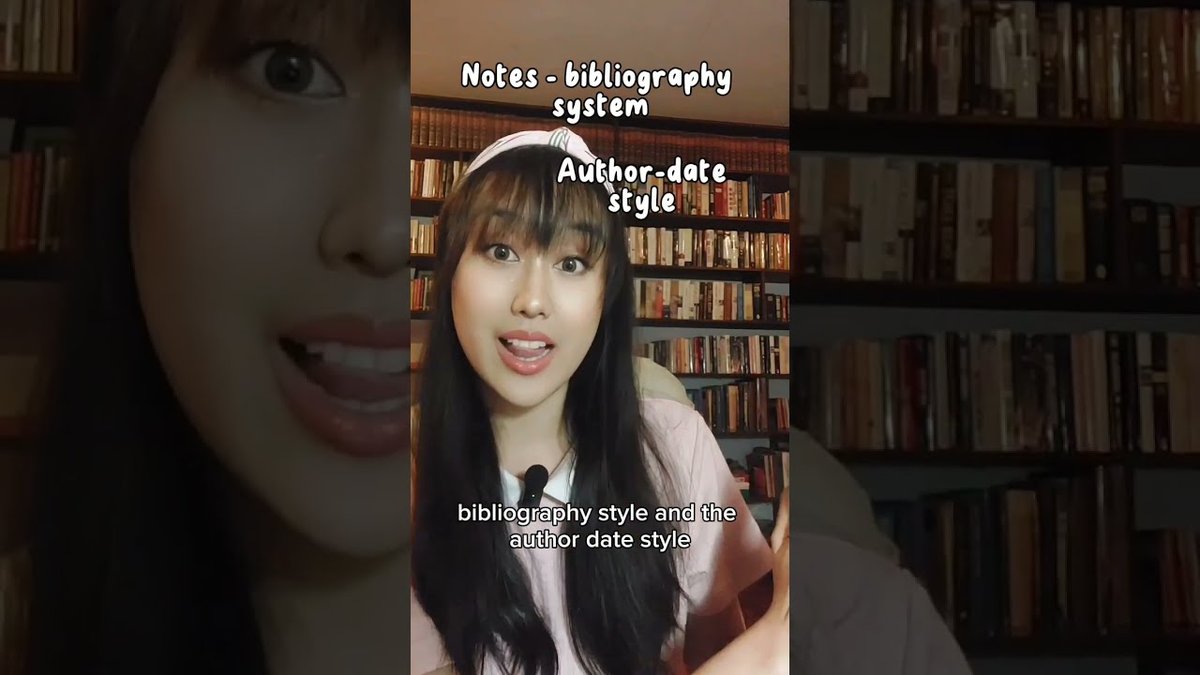
- Shared Citation Systems: Both offer the Notes-Bibliography (NB) system (humanities) and the Author-Date system (sciences).
- Your Go-To: For most academic papers, use Turabian (9th ed.) as your primary guide for applying Chicago style rules.
Demystifying the Relationship: Why They're More Alike Than Different
Let's cut straight to the chase: Turabian style is Chicago style, but with a student-centric lens. This isn't a subtle nuance; it's the foundational truth that dissolves much of the confusion. The lineage is clear, direct, and intentional, stemming from the very institution that fostered both.
The Origin Story: Kate Turabian's Legacy
The connection traces back to Kate L. Turabian, a diligent dissertation secretary at the University of Chicago. Over decades, she observed the common challenges students faced when trying to apply the expansive rules of The Chicago Manual of Style (CMOS) to their academic work. Recognizing this need, she formalized a distilled, practical guide specifically for students: A Manual for Writers of Research Papers, Theses, and Dissertations. This manual became – and remains – the definitive Turabian style.
Today, this relationship is stronger than ever. The current Turabian 9th edition is meticulously aligned with the Chicago Manual of Style 17th edition. When you consult Turabian, you're not learning a different style; you're learning how to implement the established Chicago rules effectively and appropriately for your academic context. This means that if your professor asks for "Chicago style," using Turabian's guidelines is not only acceptable but often precisely what they expect for student papers.
The Real Divide: Audience and Scope
While the underlying rules are shared, the primary key difference between Turabian and Chicago style lies in their intended audience and, consequently, their scope. Imagine two meticulously detailed maps: one covers an entire continent, rich with geological data, historical markers, and meteorological patterns. The other is a hyper-focused city map, highlighting pedestrian routes, public transport, and local landmarks vital for getting around daily. Both maps are accurate, but they serve different users with different needs.
The Chicago Manual of Style (CMOS): The Publisher's Bible
The Chicago Manual of Style (CMOS) is the comprehensive "continent map." Weighing in at over a thousand pages, it's the authoritative voice for professional scholars, editors, and publishers across a vast array of disciplines. Its scope extends far beyond just citing sources; it delves into intricate rules for:
- Manuscript preparation for publication: Detailed guidelines on submission, editing marks, and legal permissions.
- Copyediting and proofreading: Exhaustive advice on punctuation, capitalization, hyphenation, and grammar for polished prose.
- Indexes and glossaries: How to construct and format these essential book components.
- Tables and figures: Best practices for visual elements in published works.
- Rights and permissions: Navigating copyright and fair use.
For a student simply trying to write a research paper, thesis, or dissertation, much of this information is simply not relevant. You're not preparing a manuscript for commercial publication; you're demonstrating your research and writing skills. Accessing CMOS directly can be overwhelming, akin to searching for a specific street address within an atlas of the entire world.
Turabian's Manual: The Student's Lifeline
Conversely, Turabian's A Manual for Writers of Research Papers, Theses, and Dissertations is your "city map." At around 400 pages, it's significantly more concise and acutely focused on the specific needs of academic writers. It systematically omits the publishing-specific rules found in CMOS, concentrating instead on the essential elements students need:
- Paper formatting: Clear instructions on margins, line spacing, font, and heading levels.
- Citation practices: Detailed guidance on how to properly cite sources using both primary Chicago documentation systems.
- Structuring academic arguments: Advice on thesis statements, introductions, and conclusions.
- Crafting bibliographies and reference lists: Step-by-step instructions for compiling your source lists.
Turabian acts as a streamlined filter, presenting the Chicago rules in an accessible, digestible format tailored precisely for the challenges and requirements of university coursework. It's designed to empower you to apply Chicago style correctly without getting bogged down by the intricacies of professional publishing.
Spotting the Subtle Shifts: Minor Formatting for Student Papers
Given their shared foundation, significant formatting disparities between Turabian and Chicago are rare. However, for student papers, a few subtle differences emerge, primarily because Turabian fills in the gaps where CMOS, focused on professional manuscripts, is less prescriptive about student-specific elements.
The Title Page: Turabian's Explicit Options
One of the most notable distinctions appears on the very first page of your paper.
- CMOS 17th Ed. (for professional publishing): Typically assumes a book or journal article context, where title pages are often handled by publishers or follow very specific, non-student formats. Consequently, it does not specify a standard format for a student title page.
- Turabian 9th Ed. (for students): Recognizes the universal need for a clear, standardized title page in academic submissions. It provides two distinct options for student title pages:
- A formal title page: Often preferred for theses, dissertations, and longer papers, featuring the title, author's name, course, date, and sometimes institutional information, all centered and strategically spaced.
- A less formal title page: A simpler option, often used for shorter papers, where the identifying information appears on the first page of text, following the format of a typical journal article.
This explicit guidance from Turabian ensures students have clear models to follow, preventing ambiguity about how to present their work professionally from the outset.
Footnote Finesse: Spacing Variations
Another minor but important difference appears in the formatting of footnotes (or endnotes):
- CMOS 17th Ed.: Recommends single-spacing for individual footnotes, with a blank line separating each note entry. This helps conserve space in professional publications.
- Turabian 9th Ed.: Offers more flexibility for student papers, allowing for either single-spaced or double-spaced footnotes. Both options are acceptable within Turabian, although maintaining consistency throughout your paper is paramount. Often, double-spacing can make notes easier to read in drafts.
Beyond these specific points, rest assured that other crucial elements like the actual format of footnote entries, bibliography entries, and heading levels are identical between Turabian and CMOS. The content of your citation information – author, title, publication details – will be formatted the same way regardless of which guide you consult for a student paper.
Shared Foundation: Two Powerful Documentation Systems
This is where the "Turabian vs. Chicago" discussion truly unifies. Both guides present the exact same two primary documentation systems for citing sources, allowing you to choose the approach that best suits your academic discipline and your professor's requirements. Understanding these systems is far more critical than dwelling on minor formatting differences.
1. Notes-Bibliography (NB) System: The Humanities Standard
This system is the stalwart of the humanities, widely adopted in fields such as:
- History
- Literature
- Art History
- Philosophy
- Religious Studies
How it works: - In-text citations: You use footnotes (or occasionally endnotes) to cite sources within the body of your paper. A superscript number appears in your text after the quoted or paraphrased material, directing the reader to a corresponding note at the bottom of the page (footnote) or at the end of the paper (endnote). These notes contain full citation information the first time a source is cited, and a shortened version thereafter.
- Full Source List: At the end of your paper, you include a comprehensive, alphabetical Bibliography. This list provides full publication details for every source you cited (and sometimes other consulted sources), allowing readers to easily find your references.
Example (simplified):
In-text:
Many scholars have argued for a reassessment of the Romantic poets.¹
Footnote (first mention):
¹ William Wordsworth, Lyrical Ballads, ed. R. L. Brett and A. R. Jones (London: Methuen, 1965), 118.
Bibliography entry:
Wordsworth, William. Lyrical Ballads. Edited by R. L. Brett and A. R. Jones. London: Methuen, 1965.
The NB system is favored in humanities because footnotes allow for greater detail and nuance within the citation itself, such as acknowledging multiple editions or offering brief explanatory comments without disrupting the flow of the main text.
2. Author-Date System: The Sciences and Social Sciences Go-To
In contrast, the Author-Date system is the preferred choice for brevity and directness, particularly in the natural, physical, and social sciences, including:
- Sociology
- Economics
- Business
- Political Science
- Anthropology
- Some fields of psychology and education
How it works: - In-text citations: You use brief, parenthetical citations directly within the text of your paper. These typically include the author's last name and the year of publication, often followed by a page number if quoting or referring to a specific part.
- Example: (Smith 2020, 45)
- Full Source List: At the end of your paper, you include an alphabetical References list (sometimes called a "Works Cited" list). This list provides full publication details for every source cited in your parenthetical notes.
Example (simplified):
In-text:
Recent research indicates a strong correlation between urban planning and community health (Johnson 2018, 123).
References entry:
Johnson, Emily. 2018. "Urban Planning and Community Health Outcomes." Journal of Public Health Initiatives 42 (3): 120-135.
The Author-Date system is valued for its unobtrusive nature, allowing readers to focus on the scientific data and arguments without interruption, while still providing immediate access to the source's basic identity.
Your Action Plan: Choosing the Right Path for Your Paper
Now that you understand the nuanced relationship between Turabian and Chicago style, and the two main documentation systems, how do you apply this knowledge to your next paper? The path to correct citation is clear and methodical.
Step 1: Consult Your Assignment Prompt First
This is your golden rule. The ultimate authority on how to format and cite your paper is always your instructor and the assignment prompt. Before you even open a style guide, read the instructions carefully. Look for explicit mentions of:
- "Chicago style"
- "Turabian style"
- "Notes-Bibliography (NB) system"
- "Author-Date system"
- Specific edition numbers (e.g., "Chicago 17th ed." or "Turabian 9th ed.")
If your prompt specifies "Chicago style," remember that Turabian is your student-focused guide for applying those rules. If it mentions "Turabian," you're all set.
Step 2: Know Your Academic Field
If your assignment prompt doesn't specify which documentation system to use, your academic discipline is usually the next best indicator. As we explored:
- For Humanities (History, Art History, Literature, Philosophy): Lean towards the Notes-Bibliography (NB) System. This is the traditional and expected approach in these fields, allowing for rich, detailed citations.
- For Natural, Physical, and Social Sciences (Sociology, Business, Economics, Political Science): The Author-Date System is typically the standard. It prioritizes conciseness and quick reference to the author and publication year.
This guidance helps you make an educated guess that aligns with disciplinary conventions.
Step 3: When in Doubt, Ask Your Professor
No matter how confident you feel, if there's any ambiguity in the assignment prompt or about the preferred documentation system, simply ask your professor. A quick email or a question during office hours can save you hours of reformatting later. They might have a personal preference or a specific reason for choosing one system over another, even if it deviates slightly from general disciplinary norms.
Practical Recommendation: Seamlessly Blending Turabian and CMOS
For virtually all student papers—from essays and research papers to master's theses and doctoral dissertations—you should use Turabian's A Manual for Writers of Research Papers, Theses, and Dissertations (9th edition) as your definitive guide for applying Chicago style.
- Use Turabian for all student-specific formatting guidelines: This includes your title page, overall paper layout (margins, font, spacing), and section headings. Turabian provides clear examples and instructions for these elements.
- Rely on Turabian for all your citation needs: Whether you're using the Notes-Bibliography or Author-Date system, Turabian will show you exactly how to format footnotes, endnotes, parenthetical citations, and your final bibliography or references list.
While CMOS 17th Edition is the ultimate source, Turabian 9th Edition distills its essence into a manageable and actionable resource for students. Leveraging a specialized tool like a Turabian bibliography generator can also significantly streamline the citation process, ensuring accuracy and consistency without manually memorizing every detail. It takes the guesswork out of formatting your sources, allowing you to focus on the content of your research.
Common Questions & Clear Answers
Even with a solid understanding, a few questions often pop up when discussing Turabian and Chicago style. Let's tackle them directly.
Is Turabian a "simpler" version of Chicago?
No, not exactly "simpler" in terms of fewer rules, but rather a focused application of Chicago style. All the core rules for citation, grammar, and style are maintained. Turabian simply omits the extensive publishing-specific guidelines found in CMOS that are irrelevant to students, making the manual less overwhelming and more directly applicable to academic papers.
Can I use Turabian if my professor says "Chicago"?
Absolutely, and you often should. When a professor requests "Chicago style" for a student paper, they are almost invariably expecting you to follow the guidelines laid out in Turabian's manual. Turabian is the student-friendly, purpose-built version of Chicago style. Using it demonstrates your understanding of the expected academic conventions.
Does Turabian 9th Edition use CMOS 17th Edition rules?
Yes, precisely. The Turabian 9th edition is directly based on and fully consistent with the Chicago Manual of Style 17th edition. They are in lockstep, meaning any rule you find in Turabian regarding citation or academic formatting is a direct application of a Chicago rule.
What about endnotes instead of footnotes? Are they different?
Within the Notes-Bibliography system, both footnotes (at the bottom of each page) and endnotes (collected at the end of the paper, before the bibliography) are acceptable options. Turabian and Chicago treat them as variations within the same system. The choice between footnotes and endnotes often depends on your professor's preference or the specific requirements of your institution. Both are formatted similarly once you choose one.
Do Turabian and Chicago have different rules for numbers or abbreviations?
For the most part, no. Rules for spelling, capitalization, use of numbers (e.g., spelling out numbers below 100), abbreviations, and other style elements are consistent between Turabian and CMOS. Again, Turabian condenses and highlights the most common rules pertinent to academic writing, but it doesn't invent new stylistic conventions.
Mastering Your Academic Voice: The Path Forward
The goal of any style guide isn't to create arbitrary hurdles but to foster clarity, consistency, and academic integrity. In the case of Turabian vs. Chicago Style, the message is clear: they are two sides of the same coin, each serving a distinct but related purpose.
As a student, your most valuable asset for applying Chicago style will be Turabian's A Manual for Writers of Research Papers, Theses, and Dissertations. It's a pragmatic, user-friendly guide that distills the vast knowledge of The Chicago Manual of Style into actionable advice for your assignments. By embracing Turabian, you're not just following rules; you're adopting a professional standard that will elevate your academic writing.
Focus on understanding the two documentation systems (Notes-Bibliography and Author-Date), always prioritize your assignment instructions, and when in doubt, never hesitate to ask your instructor. With these principles in hand, you'll navigate the world of academic writing with confidence and precision, allowing your ideas to shine through clearly and credibly.