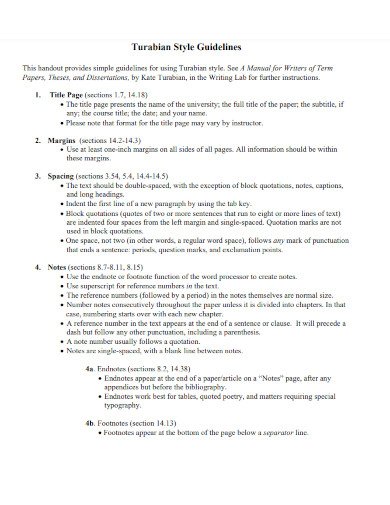
Navigating academic waters can feel like a labyrinth, especially when you're wrestling with the nuances of proper citation. Just when you think you've mastered one style, another rears its meticulously formatted head. But fear not, future scholar, because understanding the Turabian Citation Examples & Formatting Guide doesn't have to be a source of stress. This guide is your friendly, expert compass, designed to demystify Turabian style and empower you to cite with confidence and precision, ensuring your brilliant ideas get the academic credit they deserve.
You're here to learn, to grow, and to impress your professors, and proper citation is a critical component of that success. Let's dive in and make Turabian your academic superpower.
At a Glance: Your Quick Turabian Takeaways
- Two Main Styles: Turabian offers two primary citation systems: "Notes and Bibliography" (N&B) and "Author-Date."
- Humanities Favor N&B: Notes and Bibliography is common in fields like history, literature, and the arts, using footnotes/endnotes and a separate bibliography.
- Sciences Prefer Author-Date: Author-Date is prevalent in the physical, natural, and social sciences, employing in-text parenthetical citations and a reference list.
- Turabian is Chicago's Cousin: Turabian is essentially a student-friendly version of Chicago style, so they're nearly identical.
- Always Ask Your Instructor: If you're ever unsure which style or specific format to use, your professor's guidance is paramount.
- Proofread Relentlessly: Citation generators and even careful manual entry can have errors. Always double-check your work.
Demystifying Turabian: Your Academic Compass
Citation isn't just about avoiding plagiarism; it's about joining a scholarly conversation. It's how you acknowledge the intellectual lineage of your ideas, give credit where it's due, and allow your readers to trace your research journey. Turabian style, officially known as A Manual for Writers of Research Papers, Theses, and Dissertations by Kate L. Turabian, provides a comprehensive, systematic framework for doing just that.
Think of it as the ultimate guide to academic etiquette. When you adhere to Turabian, you're signaling to your readers (and your graders) that you understand the rigorous demands of academic scholarship.
Turabian vs. Chicago: What's the Deal?
You might hear "Chicago style" and "Turabian style" used almost interchangeably, and there's a good reason for that. Turabian is, in essence, a student-focused adaptation of the Chicago Manual of Style. While the Chicago Manual is a behemoth guide for professional publishers and scholars, Turabian condenses and streamlines those guidelines specifically for students. For most practical purposes in your academic papers, the citation formats are nearly identical. So, if your professor says "Chicago style," chances are they mean Turabian's student-friendly interpretation.
The Golden Rule: Ask Your Instructor
Before you even begin citing, here's the most critical piece of advice: always confirm the required citation style with your instructor. While this guide provides comprehensive information, individual courses or departments may have specific preferences or slight variations they expect you to follow. A quick email or check of the syllabus can save you hours of reformatting later.
Turabian's Two Paths: Notes and Bibliography vs. Author-Date
The Turabian manual, particularly its 9th edition, offers two distinct systems for citing sources: Notes and Bibliography (N&B) and Author-Date (A-D). The fundamental difference lies in how you make brief citations within the body of your text. Beyond that, the full bibliographic information in your reference list or bibliography is largely similar, though with slight formatting variations.
Let's break down each path.
Path 1: Notes and Bibliography (N&B) – The Humanities' Choice
The Notes and Bibliography style is a hallmark of the humanities. If you're studying literature, history, art, philosophy, or related fields, this is likely the style you'll be using. It's particularly flexible, allowing you to cite a wide array of source types, from ancient texts to contemporary interviews, without interrupting the flow of your prose with lengthy parenthetical citations.
In-Text Citations: Footnotes & Endnotes
In N&B style, you cite sources using numbered footnotes (appearing at the bottom of the page) or endnotes (collected at the end of your paper). A superscript number in your text corresponds to the numbered note.
- Superscript Numbers: Each time you refer to a source, place a superscript number immediately after the relevant phrase, clause, or sentence, typically after any punctuation marks.
- Example: As one scholar notes, "The impact was undeniable."¹
- Full Footnote Example: Your first reference to a source generally requires a "full" note, providing complete publication details.
- Malcolm Gladwell, The Tipping Point: How Little Things Can Make a Big Difference (Boston: Little, Brown, 2000), 64–65.
- Key elements: Author, Title, (Place of Publication: Publisher, Year), page number(s). Notice the commas separating elements and parentheses around publication info.
- Shortened Footnote Example: For subsequent references to a source you've already cited in full, you can use a "shortened" note. This saves space and keeps your notes concise.
- Gladwell, Tipping Point, 71.
- Key elements: Author's last name, shortened Title, page number(s).
- Clarification: "Ibid." While still technically acceptable, Turabian (and Chicago) increasingly discourages the use of "ibid." for successive citations from the same source, preferring the shortened note. However, if you have two consecutive notes citing the exact same page of the exact same source, "Ibid." can still be used sparingly.
The Bibliography: Your Master Source List
Accompanying your notes is a separate bibliography, usually titled "Bibliography" or "Works Cited." This alphabetical list provides full bibliographic details for all sources you cited in your paper, and often includes other relevant sources you consulted even if you didn't directly cite them.
- Format and Purpose: Each entry in the bibliography allows readers to find the source themselves. It typically includes more details than a full footnote and is formatted differently (e.g., author's last name first for alphabetical ordering, different punctuation).
- Bibliography Example (year at end):
Gladwell, Malcolm. The Tipping Point: How Little Things Can Make a Big Difference. Boston: Little, Brown, 2000. - Key differences from a full note: Author's last name first, periods instead of commas between major elements, publication year at the very end.
- Key Formatting Notes:
- Alphabetical by author's last name (or by title if no author).
- First line of each entry is flush left; subsequent lines are indented (hanging indent).
- Single-spaced within each entry, double-spaced between entries.
Path 2: Author-Date (A-D) – The Sciences' Standard
The Author-Date style is the standard in the physical, natural, and social sciences, as well as some technical fields. Instead of footnotes, brief citations are placed directly within the text using parentheses, making it quick and easy for readers to identify the source and year of publication. This system emphasizes the recency of research, which is often crucial in scientific disciplines.
In-Text Citations: Parenthetical Power
In A-D style, you place a brief citation in parentheses, usually including the author's last name and the year of publication, often with page numbers for direct quotes or specific passages.
- Format: (Author Year, page): The most common format is (Author Year, page number).
- Example: The study found a significant correlation (Smith 2018, 45).
- If the author's name is already mentioned in the text, you only need the year and page number in parentheses: Smith (2018, 45) argued that...
- In-Text Example:
The theory suggests a fundamental shift in perception (Gladwell 2000, 64–65). - Key elements: (Author's last name Year, page number[s]). No commas between author and year.
The Reference List: Your Scientific Record
Instead of a bibliography, A-D style uses a "Reference List" (sometimes called "References"). This list, like a bibliography, provides full bibliographic details for all sources cited in your paper, organized alphabetically by author.
- Format and Purpose: The reference list entries are designed to be easily matched with the in-text citations. The primary formatting difference from N&B bibliography entries is the placement of the publication year.
- Reference List Example (year before title):
Gladwell, Malcolm. 2000. The Tipping Point: How Little Things Can Make a Big Difference. Boston: Little, Brown. - Key differences from N&B bibliography: Publication year placed immediately after the author's name, followed by a period.
- Key Formatting Notes:
- Alphabetical by author's last name.
- First line of each entry is flush left; subsequent lines are indented (hanging indent).
- Single-spaced within each entry, double-spaced between entries.
Crafting Your Citations: Essential Examples Across Source Types
Now, let's get into the practical examples you'll use most often. Remember, consistency is key, and while the minor details vary between N&B and A-D, the core information remains the same.
Book (Single Author)
A foundational source for many academic papers.
Notes and Bibliography (N&B)
- Full Footnote:
- Michael Pollan, The Omnivore’s Dilemma: A Natural History of Four Meals (New York: Penguin Press, 2006), 99.
- Shortened Footnote:
- Pollan, Omnivore’s Dilemma, 105.
- Bibliography Entry:
Pollan, Michael. The Omnivore’s Dilemma: A Natural History of Four Meals. New York: Penguin Press, 2006.
Author-Date (A-D)
- In-text Citation:
(Pollan 2006, 99) - Reference List Entry:
Pollan, Michael. 2006. The Omnivore’s Dilemma: A Natural History of Four Meals. New York: Penguin Press.
Journal Article (Print or Online)
Crucial for citing peer-reviewed research. Note the use of "no." for issue number and "vol." for volume. For online articles, include a DOI or URL.
Notes and Bibliography (N&B)
- Full Footnote (Online with DOI):
- Sarah B. Johnson, "The Digital Divide in Rural America," Journal of Applied Sociology 72, no. 3 (2019): 245, https://doi.org/10.1086/689123.
- Shortened Footnote:
- Johnson, "Digital Divide," 250.
- Bibliography Entry:
Johnson, Sarah B. "The Digital Divide in Rural America." Journal of Applied Sociology 72, no. 3 (2019): 240–62. https://doi.org/10.1086/689123.
Author-Date (A-D)
- In-text Citation:
(Johnson 2019, 245) - Reference List Entry:
Johnson, Sarah B. 2019. "The Digital Divide in Rural America." Journal of Applied Sociology 72 (3): 240–62. https://doi.org/10.1086/689123.
Website
Citing web pages can be tricky due to varying levels of information. Prioritize author, title, sponsoring organization, publication/revision date, and URL. If no publication date, use an access date.
Notes and Bibliography (N&B)
- Full Footnote (with author and date):
- John Doe, "Understanding Climate Change Models," National Geographic, last modified February 15, 2023, https://www.nationalgeographic.com/climate-change-models.
- Shortened Footnote:
- Doe, "Climate Change Models."
- Bibliography Entry: (If a bibliography entry isn't needed or if the source is ephemeral, a note might suffice).
Doe, John. "Understanding Climate Change Models." National Geographic. Last modified February 15, 2023. https://www.nationalgeographic.com/climate-change-models.
Author-Date (A-D)
- In-text Citation:
(Doe 2023) - Reference List Entry:
Doe, John. 2023. "Understanding Climate Change Models." National Geographic. Last modified February 15. https://www.nationalgeographic.com/climate-change-models.
Chapter in an Edited Book
When you're citing a specific chapter or essay from a collection by different authors.
Notes and Bibliography (N&B)
- Full Footnote:
- Rebecca Solnit, "The Faraway Nearby," in The Best American Essays 2019, edited by Rebecca Makkai (Boston: Houghton Mifflin Harcourt, 2019), 17.
- Shortened Footnote:
- Solnit, "Faraway Nearby," 21.
- Bibliography Entry:
Solnit, Rebecca. "The Faraway Nearby." In The Best American Essays 2019, edited by Rebecca Makkai, 15–28. Boston: Houghton Mifflin Harcourt, 2019.
Author-Date (A-D)
- In-text Citation:
(Solnit 2019, 17) - Reference List Entry:
Solnit, Rebecca. 2019. "The Faraway Nearby." In The Best American Essays 2019, edited by Rebecca Makkai, 15–28. Boston: Houghton Mifflin Harcourt.
These examples cover the most common source types, but remember, the Turabian manual (and its parent, Chicago Manual of Style) has guidelines for virtually any source you might encounter, from interviews and podcasts to maps and government documents. Don't hesitate to consult the official resource for less common cases.
Mastering the Details: Formatting Your Paper in Turabian Style
Beyond individual citations, Turabian also provides guidelines for the overall presentation of your academic paper. This ensures a professional, consistent look and feel that enhances readability.
General Paper Format Overview
- Font and Size: Typically, 12-point Times New Roman or a similar readable serif font.
- Margins: 1 inch (2.54 cm) on all four sides.
- Line Spacing: Double-space the main text of your paper. Block quotes, footnotes/endnotes, bibliography/reference list entries (within each entry, not between), and table titles/figure captions are typically single-spaced.
- Page Numbering: Place page numbers in the upper right-hand corner of every page, starting with page 1 on the first page of your main text (the title page is counted but not numbered).
- Title Page: A separate title page is often required. It typically includes your paper's title, your name, course name and number, and the date, all centered and double-spaced. Check with your instructor for specific requirements. If no separate title page, your first page of text will typically include the title at the top, followed by your name.
Tables and Figures
Visual elements like tables and figures can enhance your argument, but they need to be formatted correctly.
- Labeling: Tables are labeled "Table 1," "Table 2," etc., above the table. Figures are labeled "Figure 1," "Figure 2," etc., below the figure. Both should have descriptive titles.
- Placement: Place tables and figures as close as possible to where they are first mentioned in the text.
- Source Notes: If a table or figure is adapted or reproduced from another source, you must cite that source in a "Source:" note below the table or figure itself, following a shortened note or author-date format.
Quoting and Paraphrasing
How you integrate others' words and ideas is as important as how you cite them.
- Block Quotes: For direct quotes of five or more lines (or more than 100 words, depending on specific guidelines), set them off as a "block quote." Indent the entire block 0.5 inches from the left margin, double-space within the block, and do not use quotation marks. The citation comes after the final punctuation of the block quote.
- Inline Quotes: Shorter quotes are integrated directly into your text with quotation marks.
- Attribution Essentials: Whether quoting or paraphrasing, always introduce the source's ideas clearly and follow up with the appropriate citation. Paraphrasing still requires a citation!
Common Turabian Pitfalls & How to Sidestep Them
Even seasoned writers can stumble. Being aware of common mistakes can help you avoid them.
- Inconsistent Style (N&B vs. A-D): The biggest error. Once you choose (or are assigned) one system, stick to it absolutely. Never mix footnotes with parenthetical citations in the same paper.
- Missing Information: Forgetting page numbers for direct quotes, omitting a publisher, or leaving out a date. Always gather all relevant information about a source as you research.
- Formatting Errors: Incorrect indentation for bibliography/reference list entries, using commas instead of periods (or vice-versa) where they shouldn't be, or inconsistent spacing. Pay close attention to punctuation and layout.
- Over-reliance on Automatic Generators Without Proofreading: While useful, a Turabian bibliography generator is a tool, not a substitute for your critical eye. They can make errors, especially with complex source types or if you input information incorrectly. Always double-check its output against the manual's guidelines and the examples provided here.
- Lack of Clarity in Notes (N&B): In N&B, make sure your full notes are truly full the first time a source appears, and your shortened notes are clear enough to direct readers to the initial full citation.
- "Orphaned" Citations: Every in-text citation (footnote, endnote, or parenthetical) must have a corresponding full entry in your bibliography or reference list, and vice-versa.
FAQs: Your Quick Turabian Troubleshooting Guide
Got a quick question? Here are some common dilemmas and their straightforward answers.
- Q: Do I need a bibliography if I use footnotes in N&B style?
- A: Almost always, yes. While a comprehensive first note could theoretically suffice for very short papers with few sources, Turabian strongly recommends (and most instructors require) a full bibliography listing all sources, even if they are fully cited in footnotes.
- Q: When do I use a shortened footnote?
- A: After the first time you provide a full footnote for a particular source. Any subsequent reference to that source (unless it's immediately consecutive and on the exact same page, allowing for "Ibid.") should use the shortened format.
- Q: How do I cite an interview or personal communication?
- A: Generally, personal communications (like interviews, emails, or personal letters) are cited only in the text or in a note, not in the bibliography or reference list. This is because they are non-recoverable by your reader. Provide the name of the person, type of communication, and date.
- N&B Note example: "1. John Doe, email message to author, October 26, 2023."
- A-D In-text example: (John Doe, email message, October 26, 2023).
- Q: Can I mix N&B and A-D styles?
- A: Absolutely not! Mixing the two systems is a major formatting error. Choose one style and apply it consistently throughout your entire paper.
- Q: What if I can't find all the information for a source (e.g., no author, no date)?
- A: Do your best to find the information. If it's truly missing, indicate it. For no author, start the entry with the title. For no date, use "n.d." in place of the year. For websites, look for a "last updated" or "last modified" date. When in doubt, always prioritize the information you have and consult your instructor for their preference.
Your Turabian Toolkit: Resources for Ongoing Success
Mastering Turabian is an ongoing process, but with the right tools and a bit of practice, you'll soon be citing like a pro.
- The Official Manual: For the most authoritative and comprehensive guidance, nothing beats the source itself: Kate L. Turabian's A Manual for Writers of Research Papers, Theses, and Dissertations. Consider it an investment in your academic career.
- University Writing Centers: Most universities offer writing center services with trained tutors who can provide personalized feedback on your citations and paper formatting. Take advantage of this valuable resource!
- Online Guides: Reputable university writing labs (like Purdue OWL) and academic support sites offer excellent quick-reference guides and examples. Use these to supplement, not replace, the official manual.
You now have a solid foundation for understanding and applying Turabian citation style. Remember, the goal isn't just perfect formatting; it's clear, ethical communication that strengthens your scholarship. Take a deep breath, review your work, and approach your next paper with the confidence of a seasoned academic. You've got this.